

Damp air in your bedroom can make it feel sticky and stale, even with the AC on. It can also leave a musty smell and cause condensation on windows. This can stain or damage paintwork over time. If you want better sleep, controlling moisture and ensuring indoor air comfort are key.

A dehumidifier removes extra water from the air and collects it in a tank or sends it to a drain. This helps prevent mold and keeps fabrics and walls from smelling damp.
This guide focuses on finding the right dehumidifier for a peaceful night. You need enough moisture removal without drying out too much. It should also be quiet and have auto shutoff for safe use at night. A High-capacity Low-noise Dehumidifier is a good choice if it matches your bedroom's size.
The Deyehome dehumidifier guide is also a reference point. Deyehome has two decades of experience in environmental solutions. They offer options like the A10 and P30 series for quiet bedroom comfort. We'll explore target humidity, noise levels, capacity, climate-based technology, and more.
Why bedroom humidity control matters for sleep quality and indoor air comfort
Bedroom humidity control affects how the room feels when you lie down. The amount of water in the air, called relative humidity (RH), can make it feel clammy or dry. When RH is just right, the air feels better, and sleep quality improves.

Comfort targets: aiming for 40–60% relative humidity for a peaceful night
A common goal is 40–60% RH. This range often leads to a peaceful night because breathing is easier and bedding is less sticky. Some like it closer to 30%, while others prefer up to 70%. But comfort usually drops as you move away from the middle.
A small hygrometer makes it easy to track humidity. Instead of guessing by how stuffy the air feels, you can monitor it and keep the air comfortable all week.
Moisture problems that disrupt rest: condensation, musty air, mold, and dust mites
High humidity can make a bedroom feel heavy and damp at night. Condensation on windows or cold walls is a sign, along with a musty smell. These conditions can make it hard to relax and affect sleep quality.
- Mold can grow in corners, on fabrics, or around windows.
- Dust mites thrive in moist bedding and carpets.
- Dampness can last after showers, laundry, or rainy weather.
That’s why it’s important to remove moisture for healthy air, even in small rooms. It helps get rid of the "wet towel" feel that makes it hard to relax.
Health benefits of a healthy indoor environment beyond sleep
Keeping humidity comfortable has health benefits beyond sleep. A healthy indoor environment is less welcoming to mold and dust mites, which can irritate noses and throats. It also makes the room feel fresher, improving indoor air comfort during the day.
With consistent humidity control, many notice fewer musty smells and less dampness around windows. Over time, this balance supports healthy air and protects comfort for a peaceful night.
Noise pollution in sleep and what “whisper-quiet operation” really means
For many, sleep noise isn't just about how loud it is. It's about the sound's predictability, tone, and if it keeps your brain awake. To get quiet climate control at night, you want a steady sound that blends into the room.

Decibel basics for quiet climate control: why 10 dB sounds about twice as loud
Decibels are logarithmic, not linear. This means small changes can feel big at night. A 10 dB increase can sound about twice as loud. So, going from 50 dB to 60 dB can feel like a big jump when trying to sleep.
That's why "whisper-quiet operation" should have a real number. A product might seem okay in a bright store but feel loud in a quiet bedroom.
Bedroom-friendly benchmarks: 30–40 dB (fridge-like) vs many dehumidifiers at 50+ dB
A typical fridge is around 30–40 dB. While many standard dehumidifiers exceed 50 dB—loud enough to disrupt your rest—Deyehome’s precision engineering focuses on reducing this to a sleep-friendly 33 dB, ensuring our units blend into your room as naturally as a whisper.
When looking for quiet dehumidifiers for sleep, consider the sound rating important. The best one supports quiet operation without needing to turn it off at night.
Sound quality matters: low-pitched hum vs high-pitched whine for better sleep
Two machines can have the same dB rating but feel different. A low hum blends into the room, while a high-pitched whine grabs attention. This sharp sound is a common sleep disturbance.
For quiet climate control, look at the sound quality, not just the number. A smooth sound is easier to live with than a buzzy one.
High-capacity Low-noise Dehumidifier,How to choose the right dehumidifier
Capacity is how much water a unit can pull from the air in a day. Choosing the right dehumidifier is about finding a balance. You want enough moisture removal to stop damp air and stale odors, but it should fit your bedroom routine.
Many brands test performance at 30°C / 80% RH. This is a warm, sticky test. But, in a cool U.S. winter, this can make any model look stronger than it feels.
How to choose the right dehumidifier size for your bedroom-friendly capacity
Start by noticing what you see and feel every day. A small room that feels a bit clammy might do fine with a compact unit. For bedroom-friendly capacity, you want smooth, quiet control.
- Slightly damp: pick a modest size that can hold a stable reading on a basic hygrometer.
- Regular dampness: step up if the room struggles to stay comfortable after rainy days.
- Heavy dampness: plan for more removal when the air feels thick even with the HVAC running.
When a stronger unit makes sense: musty rooms, persistent condensation, basement-adjacent bedrooms
A stronger unit is worth it for musty smells, condensation on windows, or rooms near bathrooms or basements. A high-capacity silent dehumidifier can keep humidity from creeping back overnight. The goal is to reduce the wet feel without drying out the room.
If you’re looking for a whisper-quiet dehumidifier, check how it runs at low fan speeds. A unit that can remove moisture steadily in sleep mode often feels calmer than one that constantly ramps up and down.
Capacity comparisons for real homes: 36-pint vs 50-pint capacity and what “high-capacity silent dehumidifier” should
Choosing between 36-pint and 50-pint capacity is key. A 36-pint model is good for typical bedrooms that get damp in summer. A 50-pint unit is better for persistent dampness, larger spaces, or moisture from below-grade areas.
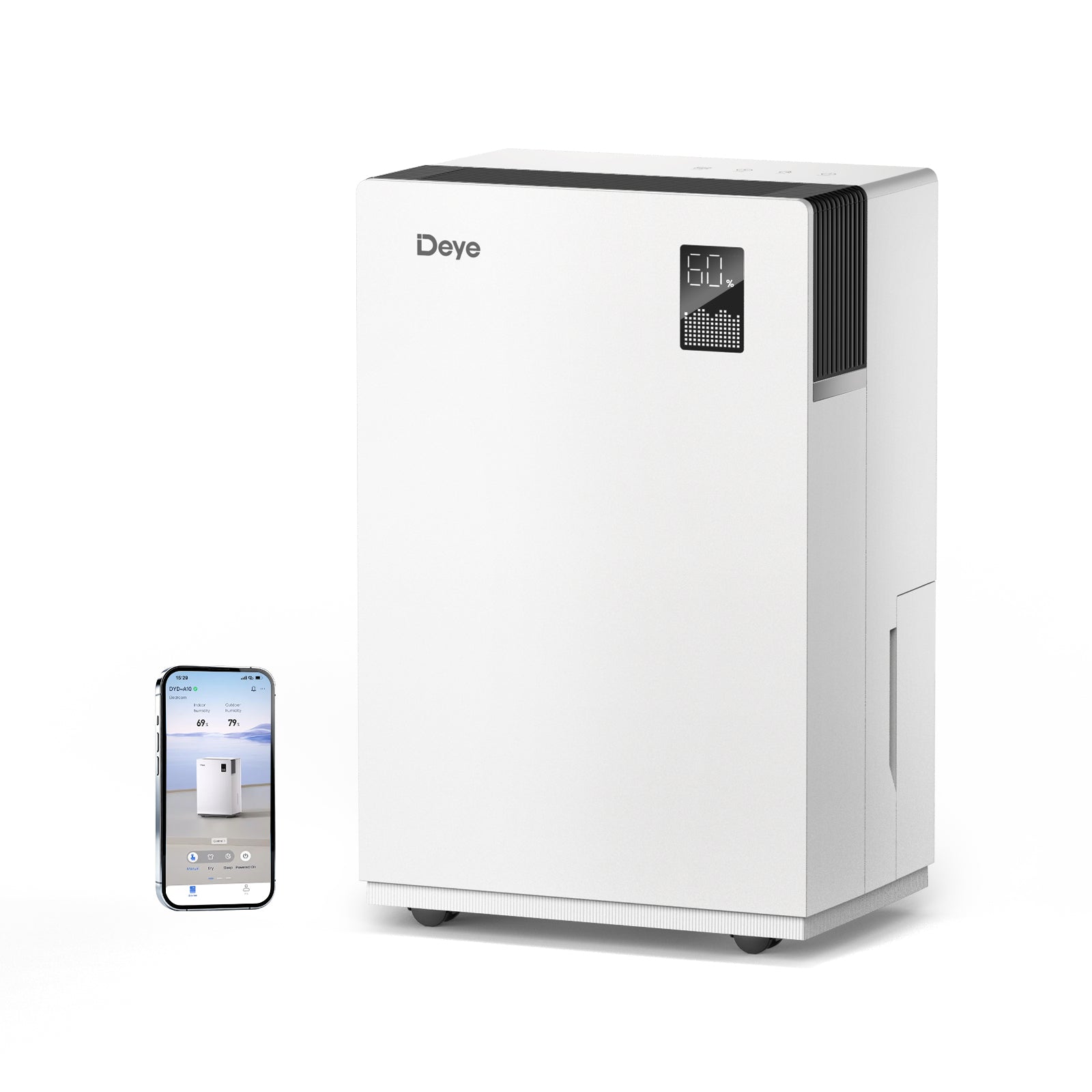
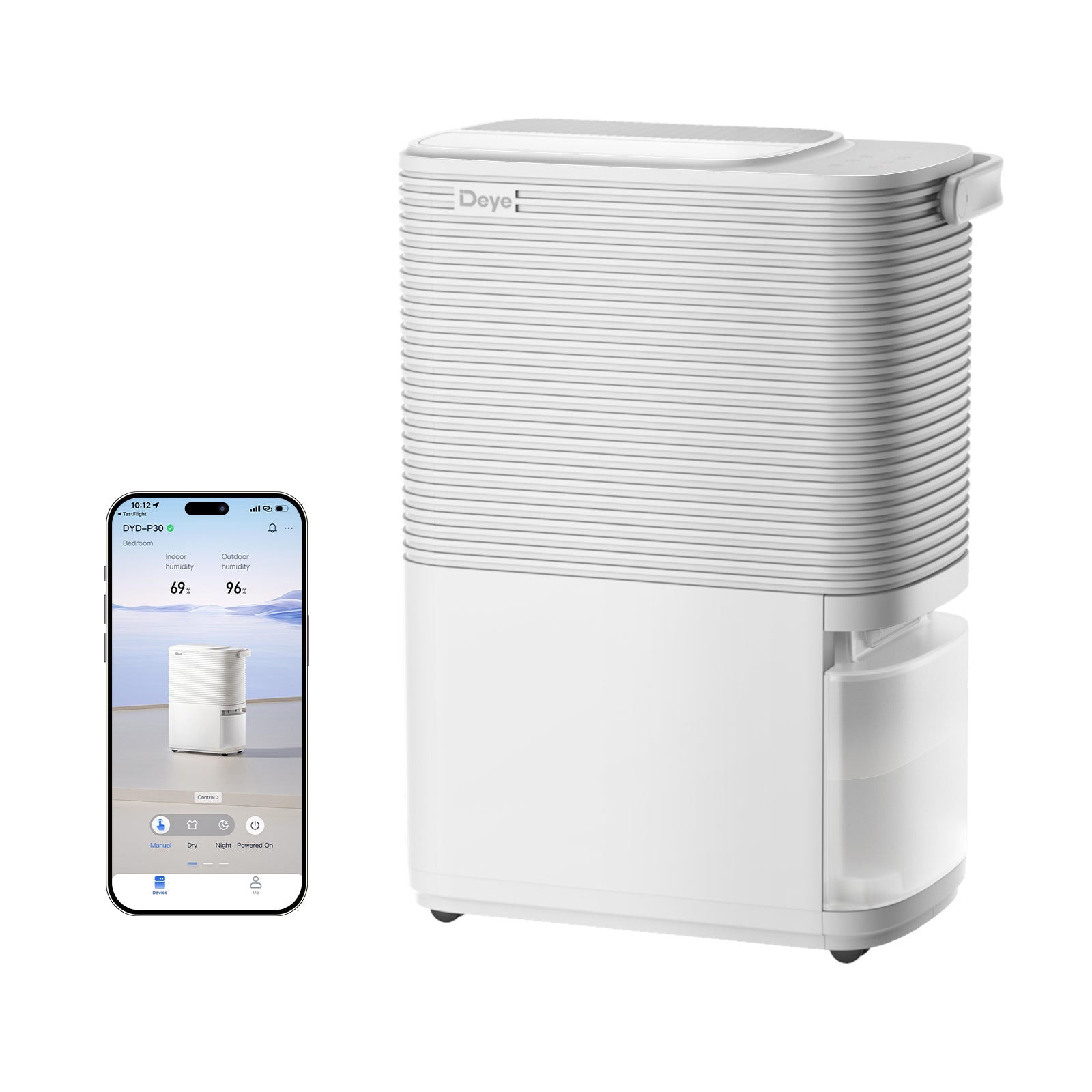
Whether you’re managing a compact master bedroom or a large, humid suite, Deyehome offers precision-engineered solutions tailored to your space. Explore our A10 Series for whisper-quiet bedroom comfort, or scale up to our P30 Series for high-capacity performance in larger areas.
Why you shouldn’t oversize: steady humidity control vs bone-dry air
Oversizing can make a bedroom feel not bone-dry in a bad way. Instead of aiming for the biggest tank, aim for steady control. A simple hygrometer helps you spot over-drying before it becomes your new normal.
If you want quieter nights, focus on a High-capacity Low-noise Dehumidifier only when the room truly needs it. The right pick is the one that hits your comfort range and stays there with less fan noise and fewer start-stop cycles.
Choosing the right technology for your climate: refrigeration vs desiccant performance
Your choice depends on your local weather and how consistent you want the air to feel at night. Both types can control the climate quietly, but they work differently in warm versus cold rooms.
Refrigeration dehumidifiers: best in hot, humid conditions and typical bedroom use
Refrigeration dehumidifiers draw in air, filter it, cool it, and then warm it slightly before releasing it. This makes the air drier and can make a bedroom feel warmer.
In hot, humid weather, these units remove a lot of moisture and keep the air comfortable. But in cold air, it's harder to cool the air enough to condense water, so they might not work as well.
Desiccant rotor models: stronger moisture removal in cold, damp seasons
Desiccant rotor models use a wheel that absorbs moisture from the air. A heating element helps to remove the water from the wheel, allowing it to drip into a tank.
These models work well in cold, damp weather. But they usually can't handle as much moisture as compressor-based units, which are better for hot, humid conditions.
For most standard home and bedroom environments where hot or humid conditions are the primary challenge, our Deyehome A10 and P30 series utilize advanced refrigeration technology to provide the most energy-efficient and quietest moisture removal experience.
Understanding rated extraction claims: common 30°C/80% RH test points vs real winter performance
Many claims about moisture removal are based on tests at 30°C and 80% RH. In these conditions, both desiccant and compressor units can look impressive on paper.
In real homes, the air is rarely this warm and humid. Desiccant units perform well in cold air, but refrigeration units can pull more moisture in hot conditions.
- If you battle summer stickiness, compare higher-capacity refrigeration dehumidifiers and confirm sleep-mode settings for quiet climate control.
- If you fight cold-season dampness, look at desiccant rotor models and check for data at 10°C or 15°C when it’s available.
- For reliable performance, match the spec to your season, not just the headline number.
Sleep-friendly features to prioritize for reliable performance
The best bedtime setups are steady and simple. A few smart features can make a noisy gadget a reliable bedroom humidity solution. It works while you rest.
Humidistat precision is key. A clear, number-based humidity setting lets you choose a target and keep it. Without it, you're guessing, and the room can go from too wet to too dry by morning.
For overnight use, look for auto shutoff and overflow protection. When the tank fills, the unit stops instead of spilling. This keeps floors and furniture safe. It also supports worry-free sleep, which is important in smaller bedrooms where a full tank can happen fast.
Check out fan and sleep modes for quiet dehumidifiers that are calm in real life. Lower fan speeds usually soften the sound and reduce that “wind” feeling on your skin. A good sleep mode should dim lights and keep changes gradual so the room stays stable.
Don't forget the filter, as it supports moisture removal for healthy air and keeps the inside cleaner over time. Many portable units use a basic dust filter, and some add a UV light filter aimed at reducing airborne bacteria. Either way, an easy-to-access filter makes upkeep faster, which helps performance stay consistent.
- Choose a bucket that’s easy to slide out and carry to the sink.
- A tank size of at least 4 liters can cut down on midnight emptying, though bigger tanks can add bulk.
- If your room stays damp, check for a continuous drain option to reduce daily chores.
Deyehome’s low-noise bedroom lineup: Deye A10 vs P30 for efficient home moisture control
Deyehome makes sure your bedroom air is steady all night. They focus on controlling moisture without making noise. When picking between Deye A10 and P30, think about your room size, humidity needs, and what noise you can sleep through.
Deyehome precision engineering built on two decades of environmental expertise
Deyehome uses two decades of environmental expertise in their precision engineering. They aim for stable humidity and reliable operation. This is important because bedrooms need consistent control, not sudden changes.
Deyehome's products are built for durability, easy controls, and reliable performance. This supports everyday routines and helps keep indoor air consistent.
Deyehome A10 and Deyehome P30: choosing room-size fit for quiet dehumidifier for small bedrooms vs larger spaces
If you need a quiet dehumidifier for small bedrooms, the Deye A10 is a good choice. For bigger rooms or spaces that stay damp, the Deye P30 is better.
Choosing the right size is key. A unit that matches your room size will keep the air comfortable and work reliably.
- Deye A10: best for smaller sleeping spaces.
- Deye P30: best for larger rooms or spaces with high humidity.
What to expect from whisper-quiet operation: targeting nighttime-friendly sound levels
For sleep, you want a dehumidifier that's as quiet as a fridge, around 30–40 dB. When comparing Deye A10 and P30, look at how each supports quiet use at night.
Sound quality is important too. A low hum is easier to ignore than a high-pitched whine, helping you sleep better.
Reliable performance and long-term home comfort focus for a healthy indoor environment
Consistent moisture control helps prevent mold and dust mites. It makes your room feel fresher. Deyehome focuses on reliable performance for long-term comfort, not quick drying.
Whether you pick Deyehome A10 for a small bedroom or Deyehome P30 for a bigger space, the goal is the same. You want efficient moisture control that's calm, steady, and sleep-friendly.
Energy and smart control choices for nightly quiet climate control
When a bedroom unit runs for hours, power use matters as much as sound. Choosing an energy star certified model helps support all-night operation while keeping waste down. This makes quiet climate control feel simple, not stressful.
Energy Star certified efficiency: why it matters for all-night operation
A dehumidifier that sips energy is easier to live with, even at night. With an energy star certified pick, you can aim for stable comfort without worrying about the electric bill. It also helps the machine cycle on and off in a calmer rhythm, supporting a peaceful night.
Smart app & voice control: setting targets without disrupting sleep
Smart app & voice control can be the difference between staying cozy and fully waking up. From bed, you can adjust the mode, fan, or target when the air feels sticky. Less fiddling in the dark means your routine stays quiet and smooth.
Timers and humidity setpoints to maintain a peaceful night with stable comfort
Clear humidity setpoints keep the unit from running nonstop. Pair those targets with timers so the machine backs off once the room feels right. This balance helps stable comfort hold through the night, with fewer surprises.
- Set humidity setpoints in the 40–60% range for a more even feel.
- Use timers to match your sleep window and reduce extra runtime.
- In hot weather, remember dehumidifying can add a bit of warmth; if you also need cooling, air conditioning can remove moisture while it cools.
Flexible drainage options and dehumidifier maintenance for long-term comfort
Start by looking at the water tank when choosing flexible drainage options. A small tank fills quickly and might wake you up at night. For overnight use, a tank of at least 4L is best. It should also slide out easily with one hand.
For a hassle-free option, consider a continuous drain. This setup sends water directly to a floor drain or sink. This way, the unit can run for days without needing to be emptied. Some models come with a drain hose adapter, while others require you to provide your own hose. Ensure the hose is straight and has no kinks to avoid leaks.
Portability is key, as dehumidifiers can be heavy. Look for units with wheels, castors, and sturdy handles. These features make it easier to move the unit around. Cord storage is also important to prevent tripping and to keep the plug safe when not in use.
Regular maintenance is essential for reliable performance. Clean the filter regularly to keep airflow strong. Dust and dirt can clog filters faster in busy homes. Some units also have UV light filtration, which helps keep the air clean. With the right drainage and maintenance, your dehumidifier will work well for years, keeping your home comfortable all season.

Leave a comment
All comments are moderated before being published.
This site is protected by hCaptcha and the hCaptcha Privacy Policy and Terms of Service apply.